


What is Nylon Rope?
Nylon rope usually refers to a rope made of nylon material. Nylon, also known as polyamide (PA for short), is a thermoplastic resin known for its excellent wear resistance, UV resistance, good toughness and elasticity.
Why Choose Us
Our Factory
BST is committed to the field of special textile accessories, providing customers with professional, reliable and stable quality products, and providing full supply chain services for textile accessories.
High Quality Product
BST strictly controls every link in production and implements details to ensure that product quality, performance and other indicators meet relevant industry standards, and provide more customers with satisfactory customizable product services.
Customization Service
BST provides personalized customization services, which can be customized according to customer needs in terms of product size, pattern, functionality, etc., and provide one-stop services such as design, proofing, sample delivery, and tracking services.
Sustainable development
BST always implements the concept of combining sustainable development with products. From product design, production, use to recycling, it fully considers environmental protection, resource conservation and other factors to achieve long-term sustainable development of society.
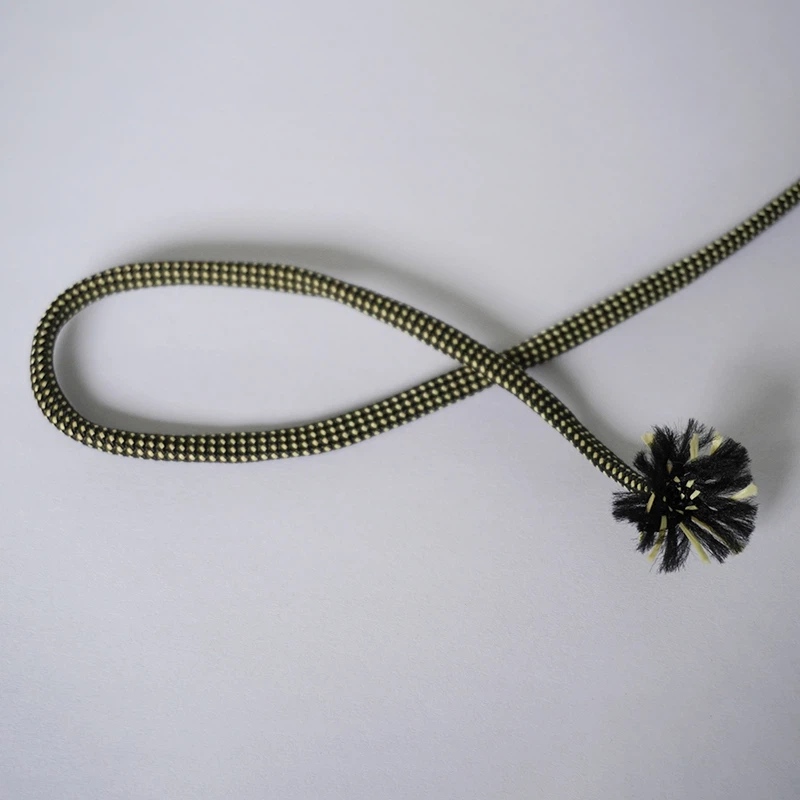


Features of Nylon Rope
Wear resistance
Nylon flat rope has good wear resistance and can resist the wear caused by long-term use or frequent friction.
Anti-ultraviolet
Nylon material has the characteristics of anti-ultraviolet sunlight deterioration, so nylon flat rope can also maintain good performance in outdoor environments.
Toughness and elasticity
Nylon flat rope has good toughness and elasticity, can withstand certain tensile and impact loads, and is not easy to break.
Lightweight
Compared with ropes made of other materials, nylon flat rope is usually lighter, easier to carry and use.
Nylon Rope and Polyester Rope - What's the Difference?
On the surface, Nylon Rope and Polyester Rope may appear to be the same, and they do share many similar characteristics. For example, they are both made from industrial-grade synthetic materials, making them a stronger alternative to natural fiber ropes, and they are both UV resistant, abrasion resistant and corrosion resistant. However, there are some key differences between the two that make them more or less suitable for certain jobs.
Nylon polyester rope is highly flexible. If necessary, nylon rope can be stretched by up to 20% without compromising its strength - after which it will simply return to its original size. This makes it particularly good when you need the rope to be more shock absorbent, such as for towing or mooring.
In contrast, polyester only stretches about 10% under pressure, making it particularly suitable for low-stress applications, such as flag poles, moorings, etc.
Both nylon and polyester will sink into water, but their water absorption varies greatly.
Although Nylon polyester rope is usually very strong, it will absorb liquids quickly and easily, which can significantly reduce its strength. The fibers soak up water and begin to sag. They also take a long time to dry. Therefore, nylon is not the best choice for wet conditions.
On the other hand, polyester ropes do not absorb water. They maintain their normal level of strength when wet, making them a better choice for marine applications.
Another important difference between nylon and polyester is their heat resistance. Nylon polyester rope does not withstand heat well and will begin to degrade at 210°C. Polyester, however, has a high melting point of 260°C, so it is usually a better choice at extreme temperatures.
When you need a rope to stretch slightly and return to its original length, or to be more shock absorbent, nylon rope may be the ideal choice, but for most other applications we tend to recommend Nylon polyester rope. (It is as strong and durable as nylon, but has many additional benefits, such as low water absorption and high temperature resistance.) In fact, many people believe that if polyester had been invented first, there would have been no need to invent nylon. It is often cheaper, has similar properties to nylon, and is a great versatile material: perfect for a wide range of uses.
Materials used for Ropes: Nylon (polyamide)
Nylon is a generic designation for a family of synthetic polymers known generically as polyamides
Widely used for many products, it can be spun, moulded and machined.
Specific Gravity: 1.13, Nylon does not float
Polyamide is durable and strong with excellent abrasion resistance
Nylon will stretch a lot before breaking. It is quite elastic and a good shock absorber. This makes it a good choice for live loads, including towing and anchoring.
Melts instead of burning, if burned emits some cyanide.
Good strength to weight ratio
Transparent to infrared light
Maximum Temperature: 210°F 99°C, Minimum Temperature: -94°F -70°C
Melting Point: 420°F 216°C
Tensile Strength: 5,800 psi
The UV resistance of Nylon is good.
When dry, polyamide is a good electrical insulator. Because it absorbs water the properties of Nylon can change when it is wet.
Good resistance to Oil and Organic Solvents, Formaldehyde and Alcohols
Poor resistance (not recommended for use with) Phenols, Alkalis, Iodine and Acids, Chlorine is also to be avoided.
Nylon is resistant to insects, fungi, animals, as well as molds, mildew and rot.
Nylon doesn't burn but when it break down in fire it forms hazardous smoke, or ash, usually containing hydrogen cyanide.
The safe loading of a nylon rope is a 1/10 to 1/12 of its breaking strength. Remember that knots weaken a rope as does age, wear, chemical attack etc.
Nylon is sensitive to high temperatures and will degrade releasing toxic materials including cyanide.
It it however resistant to UV light.
Because it absorbs water it is liable to stain. This is not necessarily harmful but can be unsightly.
Nylon rope is usually made from long extruded mono-filament. I have not seen it being chopped and re-spun, maybe for specialty items? Nylon rope comes either braided or twisted.
It can be made from thicker or thinner strands which will affect its feel, stiffness and appearance. It can be very soft and easy to handle, or quite harsh to the touch.
Nylon can be dyed and is available in many colours. Some people who have traditional boats have dyed their nylon dock and anchor lines a browny colour to make them look more authentic. Avoid strong bases and acids if you want to try this. Do a test first.
Paracord is traditionally a nylon rope used to suspend parachutes. Paracord knotting and braiding has become a popular craft among survivalist and others. There is a great number of projects available.
Will Nylon Rope Rot in Water
Without us realizing, we are benefitted on a day to day basis from the presence of synthetic polymers, known as nylons. Whether we are boating, camping, rock climbing, or engaged in any such other activity, nylons or synthetic ropes are a must in every situation. Though they have been present in our lives for nearly the last 100 years, not much is known about nylon ropes.


All about Nylon ropes
As the title suggests, we need to know whether nylon rope routes in water or not? Well, all we can say is by the end, you'll be aware of the answer to this question. At the outset it is important to know that nylon is not a single fabric, rather it is a whole family of almost similar types of materials called polyamides.
Different Uses of Nylons
Having given a brief overview of nylons and the history behind synthetic polymers, now it's time to dig deeper into the use and properties of nylon.
Out there in the sunlight
If you intend to use a rope that needs to endure the hot energy of the sun all day long, nylon ropes are the perfect answer for you. This is so because nylon ropes are UV resistant. However, it must be kept in mind that their dye fades away over time in sunlight.
Stretch-ability
If you require a rope for this reason, we prefer going for nylon. This is so because nylon is more stretchable than even polyester. The rope stretches around 15-28% at break which means it is highly elastic and can be used for a wide range of purposes.
Rough Usage
Nylon is abrasion resistant, which means it would easily undergo long term wear and tear. Its strength coupled with extreme stretchability makes it a perfect material for day to day and hardcore usage too.
Water and Marine usage
One of the weaknesses of nylon is its low performance in water owing to its composition. It absorbs water and this property makes it weakened when exposed to water or wet conditions. We suggest using polyester for everything marine as it's water-resistant and can cater to all your nautical needs.
Further, polyester is shrink-resistant which makes it ideal for situations where nylon may not perform well. Polyester also dries quickly and doesn't absorb water as nylon does, so this is also an added advantage.
Burning or heat properties
Nylon doesn't burn, as it melts when it catches fire. This is beneficial as there won't be any fire-related issues if you opt for nylon. This could be beneficial in campfire or camping like situations. Many rescue workers also prefer nylon as it is heat resistant and does a good job in fire like situations.
Contact with Rope
Do you intend to use a rope with your bare hands? In that case, nylon is a good option. This is so because nylon was created as an alternative to silk which explains its softness. On the other hand, polyester may not be good when working with bare hands. Nylon is also highly preferred for the apparel business as it possesses a good amount of softness and physical properties which are good for the skin.
Dyeing and Bright Colour
Nylon is good for dyeing with bright colors, however, it doesn't hold colors as good as polyesters. So if you require a bright colored rope, go for nylon but if you want the color to stay for a good while on the rope, polyester is the perfect choice for you.
Purposes such as Towing
Many people carry a rope in their car or vehicle lest their car goes bad someday. Most people buy ropes for this purpose only. And without any doubt nylon is a perfect choice for purposes such as towing, pulling, and so on. This is so because nylon possesses extreme stretch-ability and shock absorption characteristics. You can also use nylon for lifting jobs due to its physical properties.
Cost
Nylon is a bit expensive as compared to polyester. The unique production process adds to the cost of manufacturing and this is why it is comparatively less preferred as polyester or some other materials. On the contrary, we suggest not looking at the cost factor while buying a rope as ropes are generally one time investments. You may be able to save a couple of dollars but in the long run, a high-quality rope would be a much better investment.
Care and Maintenance required
A good thing is nylon requires the least care and maintenance possible. And same is the case with polyester and other ropes too. They don't need to be dry cleaned but it's suggested to iron and tumble dry them once in a while on low heat.
Our Factory
Changxing Bst Textile Co., Ltd. is located in Huzhou City, Zhejiang Province. The company specializes in the research and development, production and sales of textile accessories, and is committed to the field of special functional textile accessories. We have advanced production equipment and process technology, adhering to the business philosophy of quality priority, customer foremost, focus on innovation, integrity management, and win-win cooperation, and we will integrate sustainable development throughout the entire life cycle of the product, provide customers with safe and reliable high-quality products and personalized customization services, and provide full supply chain services for textile accessories.


