


Nylon webbing is a versatile and widely used material in various industries, from outdoor gear and fashion to automotive and military applications. As a nylon webbing supplier, I understand the importance of choosing the right nylon webbing for your specific needs. In this blog post, I'll share some key factors to consider when making your selection.
1. Strength and Load Capacity
One of the primary considerations when choosing nylon webbing is its strength and load - bearing capacity. The strength of nylon webbing is typically measured in pounds or kilograms of force it can withstand before breaking. This is crucial, especially in applications where the webbing will be subjected to heavy loads, such as in climbing equipment or towing straps.
For light - duty applications like making keychains or small handbags, a lower - strength nylon webbing may be sufficient. However, for more demanding tasks, you'll need to opt for high - strength webbing. For example, if you're using the webbing for a safety harness in a construction environment, it must meet strict safety standards for strength. Look for webbing that has been tested and certified to ensure it can handle the intended load.
2. Width
The width of the nylon webbing is another important factor. Webbing comes in a variety of widths, ranging from very narrow (less than an inch) to several inches wide.
Narrow webbing, such as 1 Inch Nylon Webbing, is often used for delicate applications like making jewelry, lanyards, or for adding decorative accents. It is also suitable for applications where space is limited. On the other hand, wider webbing provides more surface area and is better for distributing weight evenly. It is commonly used in applications like backpack straps, seat belts, and cargo tie - downs. When choosing the width, consider the amount of weight the webbing will need to support and the space available for the webbing in your project.
3. Thickness and Density
The thickness and density of nylon webbing can affect its performance and durability. Thicker webbing is generally more robust and can handle greater stress. It is also more resistant to abrasion, which is important in applications where the webbing will rub against other surfaces.
However, thicker webbing may be less flexible, which could be a drawback in some applications where flexibility is required. For example, in a garment where the webbing is used as a belt or trim, a thinner and more flexible webbing would be more comfortable and aesthetically pleasing. Density also plays a role; a higher - density webbing is often stronger and more resistant to wear and tear.

4. Color and Appearance
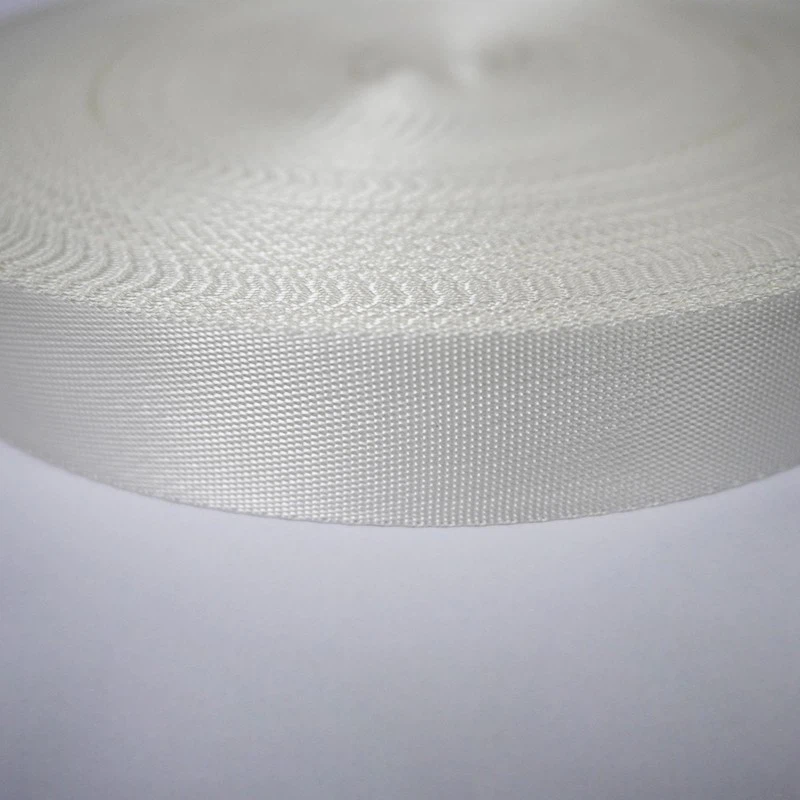
The color and appearance of the nylon webbing can be a significant factor, especially in applications where aesthetics matter. Nylon webbing can be dyed in a wide range of colors, allowing you to match it to your brand colors, product design, or personal preferences.
In addition to solid colors, there are also options like Jacquard Nylon Webbing and Jacquard Nylon Webbing, which feature intricate patterns and designs. These can add a unique and stylish touch to your products, whether it's a high - end handbag or a piece of outdoor equipment. Consider the overall look you want to achieve and choose a webbing color and appearance that complements it.
5. Finish and Coating
The finish and coating of nylon webbing can enhance its performance and durability. Some webbing is treated with a water - resistant or waterproof coating, which is essential in outdoor applications where the webbing may be exposed to rain or moisture. This coating helps prevent the webbing from becoming waterlogged, which can weaken it over time.
There are also anti - UV coatings available. Nylon webbing exposed to sunlight for extended periods can degrade due to the effects of ultraviolet (UV) rays. An anti - UV coating can protect the webbing from this damage, increasing its lifespan. Other finishes, such as a smooth or textured finish, can affect the feel and grip of the webbing. A smooth finish may be more suitable for applications where the webbing needs to slide easily, while a textured finish can provide a better grip.
6. Chemical Resistance
Depending on your application, you may need nylon webbing that is resistant to certain chemicals. For example, in industrial settings, the webbing may come into contact with oils, solvents, or other chemicals. In such cases, it's important to choose a webbing that can withstand exposure to these substances without deteriorating.
Some nylon webbings are specifically formulated to be chemically resistant. Before making a selection, identify the chemicals the webbing may encounter and consult with your supplier to ensure the webbing you choose has the appropriate chemical resistance.
7. End Use and Application
Finally, the end use and application of the nylon webbing should guide your choice. Different industries and products have specific requirements.
In the automotive industry, for example, nylon webbing used in seat belts must meet strict safety and performance standards. In the fashion industry, the focus may be more on appearance and comfort. In the outdoor gear industry, factors like strength, water resistance, and UV resistance are crucial. Consider the specific demands of your application and choose a nylon webbing that meets those requirements.
As a nylon webbing supplier, I'm here to help you make the right choice. Whether you're a small business looking for a unique webbing for your products or a large corporation with specific performance requirements, I can provide you with high - quality nylon webbing that meets your needs. If you have any questions or need further assistance in choosing the right nylon webbing, please don't hesitate to reach out. We can discuss your project in detail and find the perfect solution for you.
References
- "Textile Science and Technology: Nylon Fibers" by an industry - recognized textile research group.
- Various technical data sheets provided by nylon webbing manufacturers.