


Nylon webbing is a versatile and widely used material known for its strength, durability, and flexibility. It finds applications in various industries, including automotive, military, outdoor, and fashion. However, one of the limitations of nylon webbing is its relatively low fire resistance. In this blog post, I'll share some effective methods to enhance the fire resistance of nylon webbing as a nylon webbing supplier.
Understanding the Fire Behavior of Nylon Webbing
Before delving into the methods of improving fire resistance, it's crucial to understand how nylon webbing behaves when exposed to fire. Nylon is a synthetic polymer that melts and drips when ignited, which can spread the fire and cause burns. Additionally, nylon burns rapidly and releases toxic gases, posing a significant safety risk in fire situations.
Chemical Treatment
One of the most common ways to make nylon webbing more fire-resistant is through chemical treatment. There are several types of fire-retardant chemicals that can be applied to nylon webbing, including halogenated and non-halogenated compounds.
Halogenated Flame Retardants
Halogenated flame retardants, such as brominated and chlorinated compounds, have been widely used in the past due to their effectiveness in reducing flammability. These chemicals work by releasing halogen radicals when exposed to fire, which react with the fuel and oxygen to interrupt the combustion process. However, concerns have been raised about the environmental and health impacts of halogenated flame retardants, as they can persist in the environment and bioaccumulate in living organisms.
Non-Halogenated Flame Retardants
Non-halogenated flame retardants are an alternative to halogenated compounds and are considered more environmentally friendly. These chemicals include phosphorus-based, nitrogen-based, and inorganic compounds. Phosphorus-based flame retardants work by forming a char layer on the surface of the nylon webbing, which acts as a barrier to heat and oxygen. Nitrogen-based flame retardants release nitrogen gas when heated, which dilutes the oxygen concentration and suppresses the combustion process. Inorganic flame retardants, such as aluminum hydroxide and magnesium hydroxide, absorb heat and release water vapor when heated, which cools the material and reduces flammability.

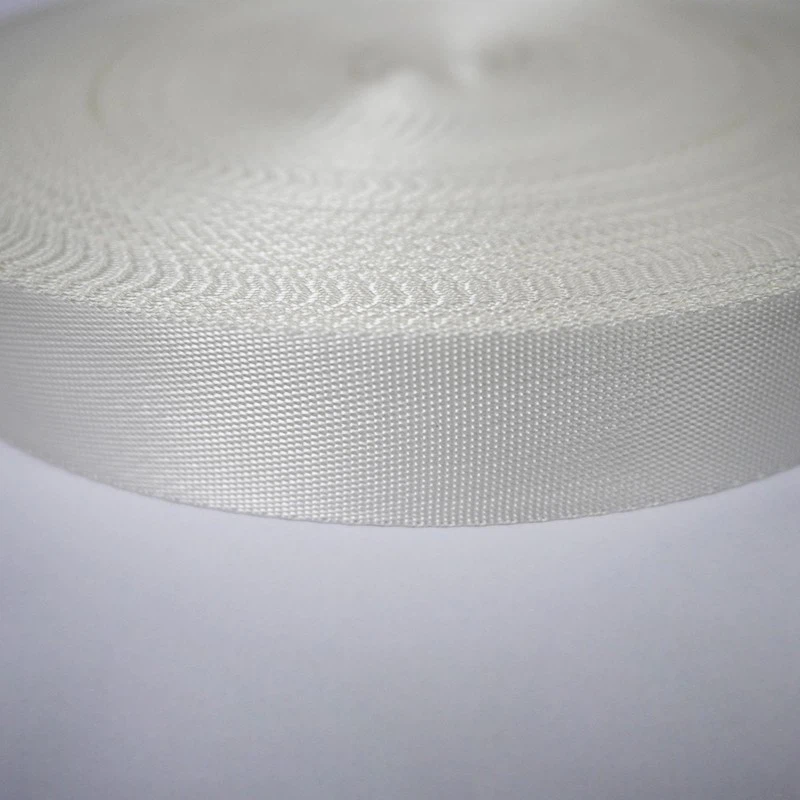
The application of fire-retardant chemicals to nylon webbing can be done through various methods, including padding, spraying, and dipping. Padding involves immersing the nylon webbing in a bath of fire-retardant solution and then squeezing out the excess liquid. Spraying involves applying the fire-retardant solution to the surface of the nylon webbing using a spray gun. Dipping involves submerging the nylon webbing in a bath of fire-retardant solution and then allowing it to dry.
Incorporating Fire-Resistant Fibers
Another way to make nylon webbing more fire-resistant is by incorporating fire-resistant fibers into the webbing. There are several types of fire-resistant fibers that can be used, including aramid fibers, fiberglass, and basalt fibers.
Aramid Fibers
Aramid fibers, such as Kevlar and Nomex, are known for their high strength, heat resistance, and flame retardancy. These fibers are made from aromatic polyamides and have a very high melting point, which makes them resistant to burning. Aramid fibers can be blended with nylon fibers to improve the fire resistance of the webbing. The resulting webbing has a combination of the strength and flexibility of nylon and the fire resistance of aramid fibers.
Fiberglass
Fiberglass is a type of fiber made from glass that is known for its high strength, heat resistance, and fire resistance. Fiberglass fibers are non-combustible and do not melt or drip when exposed to fire. Fiberglass can be blended with nylon fibers to improve the fire resistance of the webbing. The resulting webbing has a combination of the strength and flexibility of nylon and the fire resistance of fiberglass.
Basalt Fibers
Basalt fibers are made from volcanic rock and are known for their high strength, heat resistance, and fire resistance. Basalt fibers are non-combustible and do not release toxic gases when exposed to fire. Basalt fibers can be blended with nylon fibers to improve the fire resistance of the webbing. The resulting webbing has a combination of the strength and flexibility of nylon and the fire resistance of basalt fibers.
Surface Coating
Surface coating is another method to enhance the fire resistance of nylon webbing. A fire-resistant coating can be applied to the surface of the nylon webbing to form a protective layer that prevents the material from igniting and burning. There are several types of fire-resistant coatings that can be used, including intumescent coatings and ceramic coatings.
Intumescent Coatings
Intumescent coatings are a type of fire-resistant coating that expands when exposed to heat. These coatings contain a mixture of chemicals that react when heated to form a thick, insulating char layer on the surface of the nylon webbing. The char layer acts as a barrier to heat and oxygen, preventing the material from igniting and burning. Intumescent coatings are commonly used in applications where a high level of fire protection is required, such as in the construction and automotive industries.
Ceramic Coatings
Ceramic coatings are a type of fire-resistant coating that provides a hard, protective layer on the surface of the nylon webbing. These coatings are made from ceramic materials that have high heat resistance and can withstand extreme temperatures. Ceramic coatings can be applied to the nylon webbing using a spray or brush, and they provide excellent fire protection and durability.
Testing and Certification
After applying fire-resistant treatments to nylon webbing, it's important to test the webbing to ensure that it meets the required fire safety standards. There are several international and national standards for fire resistance, such as the UL 94 standard in the United States and the EN 13501-1 standard in Europe. These standards specify the test methods and performance requirements for fire-resistant materials.
To ensure that the nylon webbing meets the required fire safety standards, it's recommended to have the webbing tested by an independent testing laboratory. The testing laboratory will conduct a series of tests on the webbing, including flammability tests, ignition tests, and heat release tests. If the webbing passes the tests, it will be issued a certification indicating that it meets the required fire safety standards.
Conclusion
As a nylon webbing supplier, we understand the importance of providing our customers with high-quality, fire-resistant nylon webbing. By using chemical treatment, incorporating fire-resistant fibers, and applying surface coatings, we can enhance the fire resistance of our nylon webbing and meet the specific requirements of our customers.
If you're interested in purchasing fire-resistant nylon webbing, we offer a wide range of products, including 2 Inch Nylon Webbing, Jacquard Nylon Webbing, and 1 Inch Nylon Webbing. Our products are tested and certified to meet the highest fire safety standards, ensuring that you get a reliable and safe solution for your applications.
Contact us today to discuss your specific requirements and explore how our fire-resistant nylon webbing can benefit your projects. We look forward to working with you and providing you with the best nylon webbing solutions.
References
- Horrocks, A. R., & Price, D. (Eds.). (2001). Handbook of technical textiles. Woodhead Publishing.
- Weil, E. D., & Levchik, S. V. (Eds.). (2008). Flame retardancy of polymeric materials. CRC Press.
- Troitzsch, J. M. (2004). International plastics flammability handbook: Principles, regulations, testing and approval. Hanser Publishers.