


Tensile strength is a crucial property when it comes to knitted elastic, especially for suppliers like me who are dedicated to providing high - quality products to our customers. In this blog, we will explore what tensile strength of knitted elastic is, why it matters, and how we ensure our knitted elastic meets the required standards.
Understanding Tensile Strength
Tensile strength refers to the maximum amount of tensile (pulling) stress that a material can withstand before it breaks or deforms permanently. For knitted elastic, it is the measure of how much force can be applied to stretch the elastic without causing it to snap or lose its elastic properties.
When a knitted elastic is stretched, the fibers within the elastic structure are put under tension. The ability of these fibers to resist this tension and return to their original shape determines the elastic's tensile strength. Different factors can affect the tensile strength of knitted elastic, including the type of fibers used, the knitting pattern, and the thickness of the elastic.
Factors Affecting Tensile Strength
Fiber Type
The choice of fibers plays a significant role in determining the tensile strength of knitted elastic. Common fibers used in knitted elastic include natural fibers like cotton and synthetic fibers such as polyester and spandex.
Cotton fibers are soft and breathable, but they generally have lower tensile strength compared to synthetic fibers. Polyester fibers, on the other hand, are strong, durable, and resistant to stretching and shrinking. Spandex is known for its excellent elasticity and can significantly enhance the stretchability and recovery of the knitted elastic. By combining different fibers, we can create knitted elastic with a balance of properties, including good tensile strength.
Knitting Pattern
The knitting pattern also affects the tensile strength of knitted elastic. Different knitting patterns create different structures within the elastic, which can influence how the elastic responds to stretching forces. For example, a tightly knitted pattern may provide higher tensile strength as the fibers are more closely packed together, making it more difficult for the elastic to break under tension.
Elastic Thickness
The thickness of the knitted elastic is another important factor. Thicker elastic generally has higher tensile strength because it contains more fibers, which can distribute the stretching force more evenly. However, thicker elastic may also be less flexible and may not be suitable for all applications.
Importance of Tensile Strength in Knitted Elastic
The tensile strength of knitted elastic is crucial in various applications. In the fashion industry, for example, knitted elastic is used in waistbands, cuffs, and lingerie. If the elastic has low tensile strength, it may break or lose its elasticity over time, causing the garment to lose its shape and fit. This can lead to customer dissatisfaction and damage to the brand's reputation.

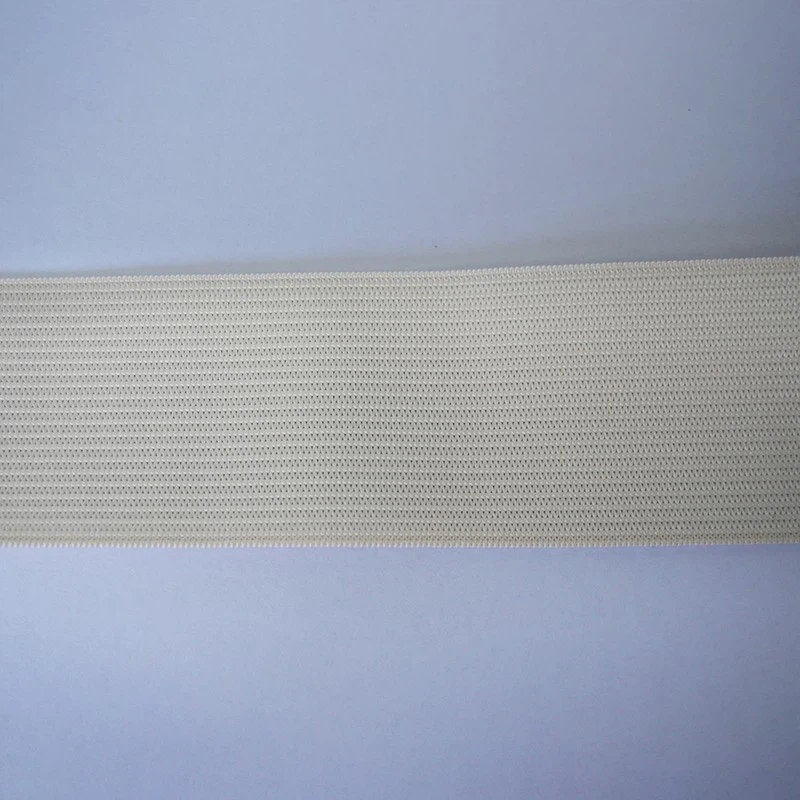
In the medical field, knitted elastic is used in bandages, compression garments, and orthopedic supports. High tensile strength is essential in these applications to ensure that the elastic can provide the necessary support and compression without breaking. A failure of the elastic in a medical device can have serious consequences for the patient's health.
Our Approach as a Knitted Elastic Supplier
As a knitted elastic supplier, we are committed to providing our customers with high - quality elastic that meets their specific requirements. We start by carefully selecting the fibers for our knitted elastic. We source high - quality polyester and spandex fibers from trusted suppliers to ensure that our elastic has excellent tensile strength and elasticity.
Our experienced knitting technicians use advanced knitting machines to create different knitting patterns. We conduct extensive testing on our knitted elastic to determine the optimal knitting pattern for different applications. For example, for applications that require high tensile strength, we may use a tightly knitted pattern.
We also offer a range of thickness options for our knitted elastic. Our customers can choose the thickness that best suits their needs, whether they need a thin and flexible elastic for delicate garments or a thick and strong elastic for heavy - duty applications.
Product Examples
We have a wide range of knitted elastic products available, each with different tensile strength properties. For instance, our 378 Crochet Elastic is a popular choice for many customers. It is made from a combination of high - quality polyester and spandex fibers, which gives it good tensile strength and elasticity. This elastic is suitable for use in various fashion applications, such as waistbands and cuffs.
Our 426 Crochet Elastic is another excellent product. It has a slightly different knitting pattern, which provides it with enhanced tensile strength. This elastic is often used in medical compression garments, where high tensile strength is essential to ensure proper compression and support.
The 424 Crochet Elastic is a versatile product that combines good tensile strength with flexibility. It is suitable for a wide range of applications, from fashion to industrial uses.
Testing and Quality Control
To ensure the quality of our knitted elastic, we have a strict testing and quality control process in place. We test each batch of elastic for tensile strength, elasticity, and other important properties. We use advanced testing equipment to measure the maximum force that the elastic can withstand before breaking and to evaluate its ability to recover its original shape after stretching.
Our quality control team also conducts visual inspections to check for any defects in the elastic, such as uneven knitting or damaged fibers. Only elastic that meets our high - quality standards is approved for sale.
Contact Us for Procurement
If you are in the market for high - quality knitted elastic with excellent tensile strength, we would love to hear from you. Whether you are a fashion designer, a medical device manufacturer, or an industrial user, we can provide you with the right knitted elastic for your needs. We offer competitive prices, fast delivery, and excellent customer service. Please contact us to discuss your requirements and start a procurement negotiation.
References
- ASTM D412 - Standard Test Methods for Vulcanized Rubber and Thermoplastic Elastomers - Tension
- ISO 37:2017 - Rubber, vulcanized or thermoplastic — Determination of tensile stress - strain properties